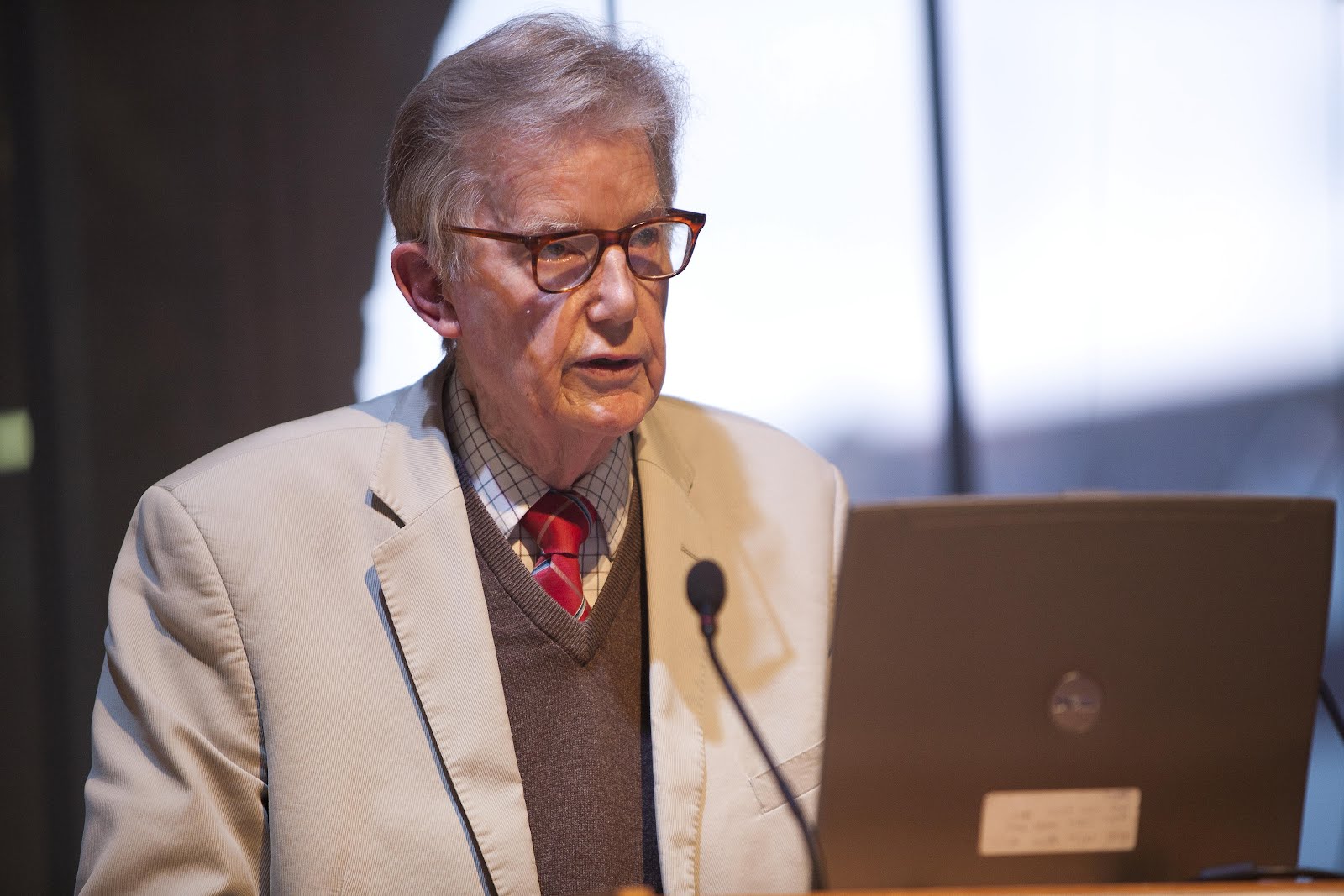
Tuesday, 12 February 2013

Long Revolutions in Wales and Japan: Report


Long Revolutions in Wales and Japan: Raymond Williams in Transit 3


November 2nd 2012 saw the third CREW collaboration with the Raymond Williams Kenkyu-kai (Society for Raymond Williams Studies), Japan. The event was funded by JSPS/MEXT Grant-in Aid for Scientific Research, with organisational support from CREW and the Richard Burton Centre, Swansea University. 


Daniel Williams’s opening remarks offered an overview of the reception of Williams’s volume The Long Revolution (1961). He argued that while much in the book prefigures future developments in Williams’s thinking and that it contains some of Williams’s best writing, the central notion of a ‘common culture’ is one that Williams began to overtly question in his later writings, and was already been problematising in his fiction.

Williams’s direct engagements with psychoanalysis are somewhat rare, but the opening sections of The Long Revolution do indeed attempt to engage with some of the developments in the the field at the time. Fuhito Endo developed this thread in Williams’s work to explore the possibility of much stronger connections between Williams’s cultural materialism and Freudian psychoanalysis. Williams’s concept of the ‘residual’ which ‘has been effectively formed in the past, but is still active in the cultural process’, shares some similarities with Freud’s notion of ‘affect’, which Endo suggested has ‘also been formed in the past, but is still active in the psychic process’. The homologous relationships between patterns in Williams thought and psychoanalytic theory were explored in some detail, and while Endo focused on Williams’s criticism, his approach seemed to suggest some particularly fruitful ways of thinking about Williams’s fiction.

Yasuhiro Kondo did turn his attention to the fiction, and discussed the ways in which Williams developed the realist tradition in his second novel Second Generation. Drawing on the argument in the Long Revolution that ‘changes in primary relationships ... will have observable social effects’, Kondo explored the connection between individual and social change in Second Generation. ‘The growth of love and the capacity for loving are fundamental in the development of society’ argued Williams, and Kondo read the novel as a fictional exploration of those ‘fundamental’ relationships. 

The 3/11 of Takashi Onuki’s ‘Culture and Society after 3/11’ referred to the date of the Fukushima Nuclear disaster. The development of the nuclear industry in Japan happened according to the requirements of a rapidly expanding late capitalist system which paid little attention to the real needs of the country’s citizens, The struggle between human needs and capitalist accumulation lies at the heart of Williams’s life-long project, and Onuki drew on the tradition of resistance mapped out in Culture and Society as a resource in the contemporary re-making of social and environmental policies.

Kieron Smith drew on his research on Welsh poet and film-maker John Ormond to explore the values informing the BBC in the 1960s, and the way in which Ormond represented Wales and the idea of an ‘educated democracy’ in his work. The dialogue between Williams’s commitment to an ‘educated democracy informing a common culture’ and Ormond’s more Arnoldian concept of culture as the best that had been thought and said offered an illuminating insight onto Welsh cultural debates and values in the 1960s. 

Onuki, Kono and Williams, all involved in the firs Raymond Williams in transit session, joined each other on stage to consider the relevance of The Long Revolution today. The discussion was chaired by Dai Smith who emphasized the educational imperative informing Williams’s work. The principle of a comprehensive education available to all was established by the time Williams was writing, but the question of what kind of education was, and still is, a hotly contested topic. Williams placed the arts at the centre of his vision. Education should not merely be offering the tools for wealth accumulation and econimic success, it should also offer insights into the reasons for why that life is worth living. Kono expanded on these insights to suggest that the concept of revolution could not be understood in the same ways in different contexts, and as capitalism had proved adept at sublimating and assimilating radical tendencies the idea of revolution had to be continually re-visited and re-invented. 

Each of our Wales-Japan events has featured the application of Williams’s criticism to the reading of Japanese texts. This is what Ryota Nishi achieved in his paper on Kazue Morisaki. Morisaki’s representation of the ‘underground labourer’ opened the possibility of comparative research into the fictions produced by coalfield societies.

It perhaps time now to think back over the three events held so far (in Swansea (twice) and Japan (once)) and to consider which comparative threads are worth developing in the future as this wonderfully rewarding dialogue with colleagues in Japan continues. 

Friday, 18 January 2013

Tony Conran (1931 - 2013)


Tony Conran was different.  He was singular. He was special. And long before the end, his lifetime’s work seemed to me, in the uncompromising monumentality of its inner consistency and completeness, like some kind of towering ancient dolmen on our level post-modern landscape. 

His career spanned more than half a century, during which he was a major contributor to the transformation of the cultural life of anglophone Wales. Translator, cultural interpreter, dramatist, but, supremely, poet, he was blessed with originality in all he did. Underpinning his work was his strong vision of the distinctive social character of Welsh culture, traditionally embodied in the very form of classic Welsh-language poetry. This same distinctiveness was, for him, differently exemplified in what he regarded as the best English-language poetry of modern Wales, of which he was himself one of the most distinguished advocates and practitioners.  

Devoted to his radical cultural vision, he was never clubbable, but was s a cherished collaborator with other poets, musicians and artists, and adored mentor of many young creative and critical talents. 

He was prevented by cerebral palsy from communicating easily with others in talk, and so he invested the written word with a unique intensity. And just as his demanding, densely layered poems mesmerised many readers, his lengthy, fiercely intellectual, letters became legendary to his many correspondents. 

His was a lasting, heroic achievement. 
Requiescat in pace. 

M. Wynn Thomas

First appeared on Literature Wales website:  http://www.literaturewales.org/news/i/142467/

Monday, 22 October 2012

Long Revolutions in Wales and Japan Conference


2012 mark 50 years since the publication of Raymond Williams’s seminal volume The Long Revolution (republished this year by Parthian Press). On Friday November 2nd, The Burton Centre / CREW, Swansea University, will host a conference at the Dylan Thomas Centre entitled ‘Long Revolutions in Wales and Japan’. The conference is free to Swansea University students and staff and £10 for everyone else. Tickets available from the Dylan Thomas Centre. The event is part of the Dylan Thomas Festival 2013.


Richard Burton Centre / CREWRaymond Williams Kenkyu-kai (The Society for Raymond Williams Studies, Japan)JSPS/MEXT Grant-in-Aid for Scientific Research

Long Revolutions in Wales and JapanRaymond Williams in Transit 3

Friday, 2nd November 2012 / Dydd Gwener, Tachwedd 2il, 20129.30 – 4.30

Dylan Thomas Centre 


9.30 – 10.00
Opening remarks and thoughts on The Long Revolution. 
Daniel Williams


10.00 – 11.00
Fuhito Endo, ‘A Reading of Freud through Williams: an Actual/Affectual Residual and the Long Revolution’
(Chaired by Shintaro Kono)


11.00 - 11. 30 Coffee

11.30 – 12.30
Yasuhiro Kondo, 'Realism in the Long Revolution: A Reading of Raymond Williams's Second Generation'
(Chaired by Takashi Onuki)


12.30  – 1. 30 Lunch,

1.30 – 2.30
Takashi Onuki, ‘A Short Talk:  Culture and Society after 3.11’

Kieron Smith, ‘Wales and the BBC’s Long Revolution’
(Chair: Daniel Williams)


2.30 - 3.15
Discussion. The Meaning of the Long Revolution
Chair: Dai Smith
Panelists to include Takashi Onuki, Shinatro Kono, Daniel Williams


3.15 - 3.45
Tea / Coffee


3.45 - 4.45.
Ryota Nishi, 'Writing the Vanishing Mentality of Underground Labourer: Kazue Morisaki and the Structure of Feeling of the Memoirs’
(Chaired by M. Wynn Thomas)


4.45 - 5.00. Closing remarks.


Fuhito Endo, Yasuhiro Kondo, and Ryota Nishi come to Swansea as part of projects supported by JSPS/MEXT Grant-in-Aid for Scientific Research.


Fuhito Endo, Professor, Seikei University Tokyo
Professor Endo is currently staying at the Centre for the History of Psychological Disciplines at University College London as a Visiting Professor.  He is now working on the historical/theoretical significance of British female psychoanalysts between the wars.

Yasuhiro Kondo, Lecturer in English, Toyo University
His research interests are in twentieth-century literature and culture in Britain. He wrote an article on the relation between strike and culture.

Shintaro Kono, Associate Professor at the Graduate School of Commerce and Management, Hitotsubashi University. Co-translator of Eqbal Ahmad's Confronting Empire, Fredric Jameson's Cultural Turn, Edward W. Said's Power, Politics, Culture and Culture and Resistance into Japanese.

Ryota Nishi, Graduate Student, Hitosubashi University, and Lecturer in English, Chuo University. His research interests are in Postcolonial Studies, especially in Edward Said.

Takashi Onuki, Associate Professor, Kwansei Gakuin University, Japan
His field of interests is the genealogical approach to culture and society in twentieth-century Britain. He is a co-editor of Cultural History: Affections and Struggles in Britain, 1951-2010 and the works he co-translated include Tony Bennett ‘s New Keyword and Edward Said’s Reflections on Exile.

Dai Smith is the Raymond Williams Chair in Cultural History within CREW which he joined in March 2005. He is also Chair of the Arts Council of Wales. Professor in the History of Wales at Cardiff University 1985 to 1992 and Editor BBC Radio Wales and Head of Programmes (English language) at BBC Wales from 1992 to 2001 when he was appointed Pro-Vice-Chancellor at he University of Glamorgan. He is now Series Editor of the Welsh Assembly Government’s Library of Wales for classic works written in English from or about Wales.

Kieron Smith is a PhD student within CREW at Swansea University. His research is focussing on the films of John Ormond within the context of national broadcasting.

The event is arranged by Daniel Williams, Director of the Richard Burton Centre, Swansea University


The Long Revolution in Wales and Japan’ is the third ‘Raymond Williams in Transit’ sessions, and the third collaboration between Welsh and Japanese academics. The first took place on October 16th, 2009, at a one day conference entitled ‘Raymond Williams in Transit: Wales – Japan’, arranged by CREW (The Centre of Research into the English Literature and Language of Wales) at Swansea University, and supported by the JSPS/MEXT Grant-in-Aid for Scientific Research. September 25th, 2010, saw a follow-up event held at Japan Women’s University, Mejiro Campus entitled ‘Fiction as Criticism / Criticism as a Whole Way of Life’.  The conference on September 25th was preceded by a symposium on the 23rd on ‘Raymond Williams in the 1950s’. These events in Japan were hosted by the Raymond Williams Kenkyukai (The Society for Raymond Williams Studies in Japan), with the support of the Faculty of Humanities at Japan Women’s University, and the JSPS/MEXT Grant-in-Aid for Scientific Research. As well as reports on the CREW website, below, Tony Pinkey has written a report on the events in Tokyo on the Raymond Williams society website: http://www.raymondwilliams.co.uk

These events have resulted in two significant publications:
A special issue of Keywords: A Journal of Cultural Materialism

A special issue of Raymond Williams Kenkyu entitled Fiction as Criticism / Criticism as a Whole Way of Life


-----------------------------

Ar Dachwedd ar 2il bydd cynhadledd ar Raymond Williams yn cymryd lle yng Nghanolfan Dylan Thomas, Abertawe. Dyma’r bedweredd digwyddiad i dynnu beirniaid ac academyddion Siapaneiadd a Chymrieg at ei gilydd i drafod gwaith Raymond Williams. Croeso cynnes i bawb. 

-------------------------------
Links

Monday, 3 September 2012

A Literary Tour: Amy Dillwyn & The Rebecca Rioter

On a glorious Saturday in July, the first sunny day after weeks and weeks of rain, 49 people boarded a bus on the trail of Amy Dillwyn and her 1880 novel, The Rebecca Rioter. 


21 July 2012 
The historical events at the centre of the book are the attacks on the Tollgates at Bolgoed and Pontardulais, but in fact the imaginative topography of The Rebecca Rioter is firmly centred on Fairwood Moor, Gower and Amy's own home, Hendrefoilan House.  Our trip followed these contours of Dillwyn’s inspiration. 

A brief stop at Upper Killay (home in Dillwyn's novel to a rough crowd of poachers, thieves and drunks) and then we swept across the cattle grid and on to the moor.  In 1843, Amy Dillwyn’s father and uncle, both JPs, had spent many a fruitless night patrolling the moor looking for Rebecca or waiting at a nearby Inn for action.  In her novel, Amy Dillwyn turns the tables on the magistrates, describing how the rioters outwitted the authorities and covertly watched their discomfiture when Rebecca eluded them.

Debra John & Kirsti Bohata on Fairwood Moor 

Back at the centre of Amy Dillwyn’s world, Hendrefoilan House, David Painting gave a talk on the architechtural significance of the grade II listed building built by Lewis Llewelyn Dillwyn and described by his daughter as an 'Elysium on earth'.  Amy Dillwyn had run the household since 1866 (when her mother died) and had managed the Home Farm for many years, but when her father died in 1892 the house was passed down the male line and she was left without a home.  Worse still was that her father died in debt and the entire contents of the house, from boot brushes to her grandfather’s gold medals, was auctioned off in a three-day sale cum visitor attraction - the auctioneers ran conveyances from Swansea and crowds came to see the family effects sold off.

Dr David Painting in front of Hendrefoilan House
Over lunch, Kirsti Bohata gave a talk on the autobiographical and historical background to The Rebecca Rioter, observing that many of the actions and incidents recorded in her father’s account of the Pontardulais riot (he was there as one of the magistrates trying to arrest the rioters) reappear in Dillwyn's novel but this time attributed to the hero and Rebeccaite, Evan Williams.

Debra John reading from Amy Dillwyn's journal

In the afternoon a spectacular drive over the moor and over Cefyn Bryn was broken only by the timely appearance of the descendants of the ponies which Dillwyn includes in her novel – Evan and his fellow Rebeccaites use the ponies as transport to the toll gates at Bolgoed and Pontardulais some 8 miles away – (and some cattle with no literary antecedents that I know of).  A brisk walk through the park and we reached Penrice Castle – the old Norman ruins in which Evan and his friend hide while on the run – and the ‘new’ house, also named Penrice Castle where Amy Dillwyn often stayed with her friend Olive Talbot.  The Talbot family’s principal home was Margam but Olive stayed at Penrice quite frequently, and no wonder for it must be one of the most beautiful locations in Wales.  The present incumbent, Thomas Methuen-Campbell, is descended from the Talbots and he gave a finely judged and engaging history of the house and family before leading the group through the formal gardens at the front of the house (and in an impromptu act of kindness, drove a few privileged members of the tour back up the not inconsiderable hill!).

Thomas Methuen-Campbell, Penrice Castle
Some heroic driving by our bus driver (of whom more below) and we reached Oxwich Bay for a much-needed cream tea - leaving just in time to meet going up the same bus in the same impassable point as we had on the way down!  Some good-natured muttering and serious maneuvering later we escaped the gridlock and headed back to Swansea.  A huge thanks to Mike, the driver, who very fittingly is a former soldier in the Royal Regiment of Wales.  Their motto, Gwell Angau Na Chywilydd, Better Death than Dishonour, is the same as that given by Amy Dillwyn to the Rebeccaites in her novel (she translates it as as 'better death than shame') and it is the guiding principle of Evan's sacrifice of his own life in order to remain true to his beloved Gwenllian.

Gwell angau na chywilydd: Mike from Davies Coaches
Debra John reading from The Rebecca Rioter, Oxwich Bay
The final stop was St Paul’s Church in Sketty, where Amy Dillwyn’s ashes (she was a firm believer in cremation long before it was popular or even legal in Britain) are interred in the family grave (it's on the right, second row back as you approach the church from the Lychgate).  

Some final readings from Amy's journal on the subject of immortality and commemoration brought the tour to a fitting close.

St Paul's Churchyard, Sketty
Thanks to everyone who came on the tour and made it such a lovely day. Special thanks to Debra John, Thomas Methuen-Campbell, David Painting, Liza Penn-Thomas, Rowan O'Neill, Sian Williams, Steve Williams and Bronwen Price.  With financial support from the AHRC and CREW, Swansea University.

More photos are on Flikr.

Monday, 30 July 2012

The Dillwyn Day: Science, Culture, Society

I am not sure how many people’s careers have been memorialized as a canal, but William Dillwyn must be amongst the most influential. A Pennsylvanian Quaker, William Dillwyn was central to the anti-slavery campaign. In 1808, Thomas Clarkson published a river map to show clusters of activists as tributaries and great rivers which fed into the sea of the anti-slavery movement. Uniquely William Dillwyn appeared twice on this map, each time – again uniquely – not as a river or tributary, but as a canal which linked up key campaigners. Professor Chris Evans (University of Glamorgan) put the still neglected William Dillwyn’s career into context as one of six talks on the Dillwyns staged as part of a one-day event to draw attention to this remarkable family.

The Dillwyn Day, held at the National Waterfront Museum on Friday 22 June, was opened by Edwina Hart, Assembly Member and Minister for Minister for Business, Enterprise, Technology and Science
with a speech that testified to her longstanding personal interest in the Dillwyns of Penllergare House (who became Dillwyn Llewelyns on inheriting the estate). The text of her speech is available on the CREW website.

A talk on the Dillwyn Dynasty as a whole was given by Dr David Painting (in competition with some vociferous schoolchildren who chose that morning to visit the National Waterfront Museum!).
The Dillwyn family can be traced back at least to Herefordshire Quakers emigrated to Pennsylvania. The American William Dillwyn returned to Britain and bought Cambrian Pottery in Swansea for his son, Lewis Weston Dillwyn who would far rather have been a naturalist and indeed made a name for himself in that field. Lewis Weston was great friends with the eminent geologist Henry De La Beche and their children married.. Lewis Llewelyn Dillwyn and Elizabeth De La Beche built Hendrefoilan House and LLD became a popular Swansea politician, championing the cause of disestablishment in Wales. He was the father of the novelist, industrialist and campaigner, Amy Dillwyn. Lewis Weston’s daughter, Mary Dillwyn became Wales’s first female photographer and her pictures have been digitized by the National Library of Wales. His first son, John Dillwyn Llewelyn, became known for his pioneering photographic practices, his gardens at Penllergare and his observatory. Amongst his children was Thereza Dillwyn Llewelyn, who married the naturalist Nevil Story Maskelyne, and whose interest in science and photography led her to correspond (via her husband) with Darwin. It is her photograph which is on the flier.

Sadly, the Dillwyn name did not survive. Although Amy Dillwyn bequeathed her estate to her nephew, Rice, who changed his name to Dillwyn, his son Colin was killed in the Second World War. The war came before he had a chance to pursue a thesis at Oxford University on American Anti-Slavery campaigners. Had he been spared to complete that project, as David Painting remarked, perhaps William Dillwyn’s legacy would not be so comparatively neglected today.
Other talks highlighted the scientific, literary and political contributions of the Dillwyns. Richard Morris gave a talk on pioneering photographic techniques illustrated by an array of amazing images, including a wonderful example of a Victorian collage.

Professor Iwan Morus(Aberyswyth University)explained why the British Association for the Advancement of Science held their meeting in an otherwise remote corner of Wales in 1848. But even before the railways arrived at Swansea in the 1850s, this was an ‘intelligent town’ with science and culture at its heart. Dr Kirsti Bohata (Swansea University) spoke about Amy Dillwyn’s attempts to represen this industrial world in her fiction of the 1880s, which is unusual in its inclusion of images of heavy industry, particularly metal working (in which her family and Swansea as a whole was deeply involved). And Professor Prys Morgan (Swansea University) delivered a typically spellbinding talk on how Lewis Llewelyn Dillwyn contributed not only to the Liberal party, but put down Welsh roots in his cultural and political activities.

Swansea Museum provided a digital exhibition of early photographs and, to the delight of those who still value the tangible, brought in reproductions of the original photograph albums for people to handle and inspect.

The event was organized by the Dillwyn Working Group and CREW at Swansea University and the Learned Society of Wales, with financial support from the AHRC, CREW and LSW. Sincere thanks to Dr Sarah Morse, Executive Officer for the Learned Society and formerly a doctoral student at CREW, for co-organising the day.

For more information on the Dillwyns and the Dillwyn Project at Swansea University please visit the CREW website: www.swan.ac.uk/crew/researchprojects/dillwyn/

More pictures of the day can be found at the Learned Society of Wales website.


Thursday, 22 December 2011

NAASWCH Extended Deadline

North American Association for the Study of Welsh Culture and History (NAASWCH)

International Conference on Welsh Studies
Bangor University
Bangor, Gwynedd, Wales
26-28 July, 2012

Call for Papers
The NAASWCH Program Committee seeks diverse perspectives on Wales and Welsh culture – as well as proposals focused on the Welsh in North America – from many disciplines including: history, literature, languages, art, social sciences, political science, philosophy, music, and religion. NAASWCH invites participation from academics, postgraduate/graduate students and independent scholars from North America, the United Kingdom, and elsewhere.
Those wishing to present a paper suitable for a 20-minute reading may submit an abstract (maximum one-page). Proposals for thematic sessions, panel presentations, or other formats are also welcome. Please include a brief (one-page) c.v. with your abstract submission. The abstract-proposal deadline is 2 January 2012 but early proposals are encouraged. Participants will be notified by mid-February. E-mail submissions are welcome and will be acknowledged promptly. If you have not received confirmation of your electronic submission within one week, please resend the document.
NAASWCH works to promote scholarship on all aspects of Welsh culture and history; to develop connections between teachers and scholars in the United States, Canada, and the United Kingdom who are committed to the study of Welsh culture and society, history, language, and literature; to provide an intellectual forum in which scholars and teachers of Welsh culture may share their research and teaching experience, and to provide support for the study of Welsh-North American history and culture.
Please see the NAASWCH website for additional information: www.naaswch.org

Please submit abstracts or session proposals by no later than 23 January--PLEASE NOTE
EXTENDED DEADLINE--(electronically if possible) to Professor Tony Brown, School of English, Bangor University, Bangor, LL57 2DG (els015@bangor.ac.uk) and Dr Andrew Edwards, School of History and Welsh History, Bangor University (a.c.edwards@bangor.ac.uk).
Those who are not submitting proposals but would like to receive conference information should contact Linda Jones, Conference Administrator, College of Arts and Humanities, Bangor University l.c.jones@bangor.ac.uk; tel. +44 (0)1248 383881.

Wednesday, 7 December 2011

Penyberth@75

Seminar i nodi 75 mlynedd ers i Saunders Lewis gael ei ddiarddel o Brifysgol Abertawe

A Seminar to mark the 75th anniversary of Saunders Lewis’s dismissal from Swansea University

Gyda / With
Simon Brooks, Pyrs Gruffudd, Tudur Hallam a Robert Rhys

4pm Llun, 12 Rhagfyr 2011
Ystafell Gynhadledd y Celfyddydau a’r Dyniaethau B 03, Adeilad Keir Hardie

4pm Monday 12 December, 2011
Arts and Humanities Conference Room B03, Keir Hardie Building


This is a Welsh event with simultaneous translation into English


Am wybodaeth bellach / For further details please contact Daniel Williams daniel.g.williams@abertawe.ac.uk


Yn 1936, collodd Saunders Lewis ei swydd fel darlithydd ym Mhrifysgol Abertawe yn sgil llosgi’r ysgol fomio ym Mhenyberth gyda DJ Williams a Lewis Valentine. I nodi’r digwyddiad hwn a‘i arwyddocâd i hanes, llên a gwleidyddiaeth Cymru mae Canolfan Astudiaethau Cymreig Richard Burton yn cynnal seminar a thrafodaeth gyda rhai o’r arbenigwyr mwyaf blaenllaw ar waith a syniadaeth Saunders Lewis.


In 1936, Saunders Lewis lost his job as a lecturer at Swansea University as a result of having set fire to a military instillation at Penyberth along with D J Williams and Lewis Valentine. To mark this event the Burton Centre is hosting a seminar and discussion with some of the foremost experts on the work and ideas of Saunders Lewis.